
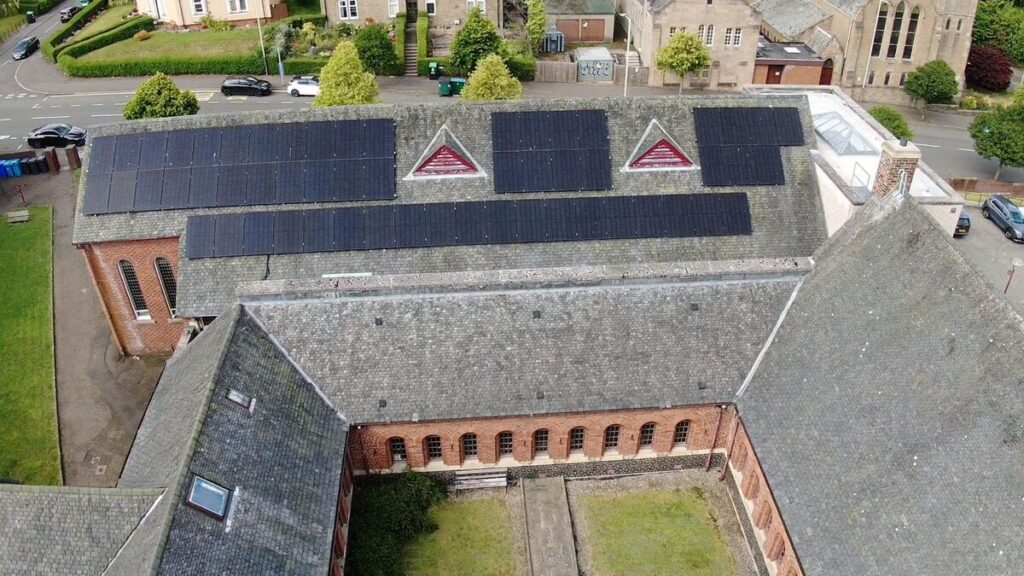
City Church Dundee — a live CARES-funded case study
Across Scotland, hundreds of halls, churches, scout huts and clubhouses are kept open by a small number of volunteers who took on a trustee role because somebody had to, and because the building matters to the people who use it. It’s unpaid, mostly invisible, and the job rarely looks like what people picture when they hear “trustee” — less strategy, more making sure the boiler gets fixed before winter and the accounts balance at year end.
If that’s you, you’ll already know the real job isn’t long-term planning. It’s next month. Whether the heating bill leaves enough in the account to cover it, whether the roof holds until someone can look at it properly, whether the doors are still open the next time the people who rely on the place turn up.
I’m a trustee too, so this isn’t advice from the outside. I’m on the board of Uphall Community Centre, run together with Kings Church West Lothian — two groups who joined forces to look after one building. We took it on through a Community Asset Transfer from West Lothian Council, completed this April, as the council looked to cut costs. A council handing over a building it can no longer afford to run, two organisations pooling what they have to keep it going — if that sounds like your situation, you’re not the only one sitting in this chair.
Alongside the day-to-day, we’ve also been going through the CARES process — the Community and Renewable Energy Scheme, run through Local Energy Scotland — looking at heating, insulation and solar together, as one project rather than three separate headaches. We’ve passed the first stage, confirmed eligible, and we’re now working out exactly what gets installed. It’s taken time, and it’s still not finished. But it’s the first thing in a while that feels like it’s building towards the building’s future, rather than just holding the line on this month.
I won’t pretend the money isn’t a big part of why this is worth doing. CARES funding can cover up to 80% of a solar installation for an eligible community building, which is a different conversation entirely to what most of us are used to having about capital costs. But if you’re like me, the grant percentage isn’t what’s actually holding you back. It’s the thought of being the one who raises it — the one who puts their head above the parapet and carries a project that could go wrong on their watch. When you’re already stretched keeping the lights on, taking on something you personally have to champion feels like the last thing you need.
That’s the bit that actually decided this for me: raising it doesn’t mean carrying it on your own. Pinnacle Solar handles the assessment, the CARES application and the technical decisions — the part that would otherwise eat evenings you don’t have. Your job is closer to bringing it to committee to have a look at, not staking your reputation on the outcome. That’s how it’s worked for us. I’m confident enough in it that I’ve put my own time into it, on top of everything else the centre already asks of me.
I’ve stayed careful, the way any trustee should, about anything that sounds too good to be true — that instinct is worth keeping, not talking yourself out of. But between the funding available, a project scoped around heating and insulation as well as solar, and a company willing to carry the technical weight rather than hand it to volunteers, this is about as sound a bet as I’ve come across for a building like ours.
If any of this sounds like your hall, your church, your club, it’s worth a look, not a commitment. Bring it to your next committee meeting as something to consider, the way I did. Nobody’s asking you to be the hero of the story. Just the one who mentioned it.
Wondering whether your building could qualify for CARES funding?
Take the free 2-3 minute CARES Community Buildings Fund Eligibility Check and find out where your building stands. Take the Free Scorecard →