
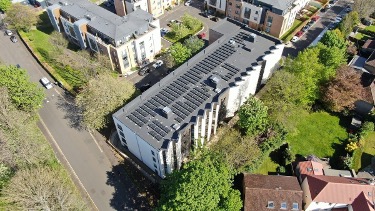
For twelve years, domestic solar was my job. I’ve lost count of the roofs I’ve stood on, but it’s comfortably in the hundreds. Terraced houses, bungalows, big detached places with room for twenty panels, I’ve seen most of what a British roof can throw at you, and I’ve fitted solar on nearly all of it. It was steady, honest work, and I don’t regret a single day of it.
The conversation was always roughly the same. A homeowner would call, usually after seeing a neighbour’s install or getting a scare from a bill. I’d survey the roof, run the numbers, and hand over a quote with a payback period attached, the length of time it takes for the savings to cover the cost of the system. For most domestic jobs, that number sat somewhere between 8 and 10 years. Sometimes longer, depending on the roof and how much electricity the household actually used during the day. Still worth it for a lot of people, especially if they planned on staying put. But never a fast return.
Then, a few years ago, a local business asked me to quote for their premises. I treated it exactly like any other job, same process, same spreadsheet, same care. When the number came back, I assumed I’d made an error. Four years. Not eight. Not ten. Four.
I went back through the calculation twice, convinced I’d slipped a decimal point somewhere. I hadn’t. The number was real, and once I sat with it, the reasons behind it were almost embarrassingly obvious.
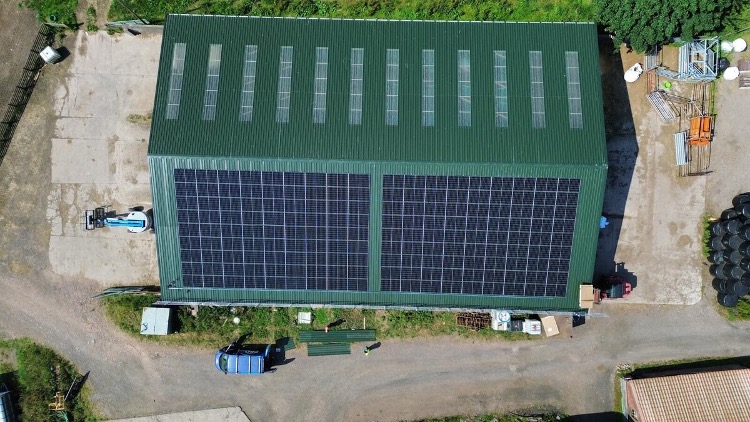
A commercial building usually has considerably more roof space than a house, which means more panels, which means more generation. That much is straightforward. The bigger factor is when the electricity gets used.
A house is often empty for large parts of the working day, everyone’s out, and the panels are quietly generating electricity that nobody’s there to use, so it either gets exported back to the grid at a low rate or stored in a battery for the evening. A business is usually occupied and drawing power through the exact hours the sun’s doing its best work, machinery running, lighting on, computers switched on, maybe refrigeration or ventilation ticking away constantly. That electricity gets used the moment it’s generated, what’s known in the trade as “behind the meter” consumption, rather than being exported and bought back later at a worse rate.
That shift changes the entire economics of the system. It also, often, reduces how much battery storage you need, since there’s less requirement to store daytime generation for evening use. Less battery means lower upfront cost, which shortens the payback period further still.
Take a straightforward comparison. A house with a 4kW system might use maybe a third of what it generates during the day, exporting the rest at a fraction of the retail rate. A commercial premises with a 50kW system, running through the working day, might use 70 or 80% of its generation directly, no export, no waiting for a battery to release it in the evening, just straight consumption at the moment of generation.
Every unit used directly is worth considerably more than a unit exported. Multiply that difference across a system many times the size of a domestic one, and the maths shifts fast. It’s not a marginal improvement. It’s a different category of return entirely.
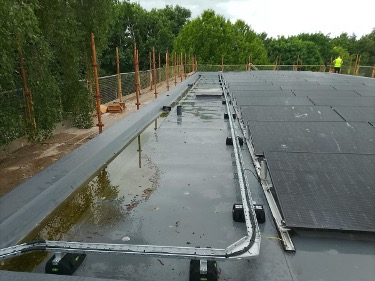
A bigger roof and better-matched usage, put together, and the four-year figure stops looking like an anomaly. It starts looking like the obvious outcome of a mismatch nobody had pointed out to me before.
I still believe in domestic solar. It works, and for the right household, in the right circumstances, it’s a genuinely good investment. I wouldn’t have spent twelve years doing it otherwise.
But once I’d seen the commercial numbers properly, I couldn’t unsee them. A business roof isn’t just bigger. It’s usually generating at exactly the moments the building needs the power most, which is the single biggest lever in the whole payback calculation, and one that has nothing to do with panel quality, installer skill, or anything else you’d normally focus on when comparing solar quotes.
If you’re a business owner and nobody’s ever walked you through what your own usage pattern would actually do to a payback calculation, it’s worth asking. The number might surprise you the way it surprised me.
What would your payback number look like?
Take the free 2-3 minute Commercial Solar Suitability & ROI Scorecard and find out where your site stands. Take the Free Scorecard →